The Tejas is still the King of the Indian skies | Gopal Sutar
youtube.comSaturday, February 14, 2026
HAL is already overburdened. Inclusion of private players for AMCA is a pragmatic approach
India's ₹15,000 crore Advanced Medium Combat Aircraft (AMCA) program has surprisingly excluded state-run HAL from its initial manufacturing shortlist. Private firms like Tata, L&T, and Bharat Forge are now being considered. This marks a significant policy shift to involve the private sector in developing India's fifth-generation stealth fighter, aiming for efficiency and diversified defense manufacturing, though HAL may join later.
Friday, January 16, 2026
HAL पर टिकी भारत की रक्षा व्यवस्था. शुरुआत सबसे कमजोर कड़ी से होनी चाहिए—ह्यूमन रिसोर्स
My article in Hindi. Also available in English, please see the ThePrint website. HAL पर टिकी भारत की रक्षा व्यवस्था. शुरुआत सबसे कमजोर कड़ी से होनी चाहिए—ह्यूमन रिसोर्स
HAL इंजीनियरों को विदेशों में और IITs तथा IIMs जैसे प्रमुख संस्थानों में प्रशिक्षण देने पर भारी निवेश करता है, लेकिन उनका पूरा और सही उपयोग नहीं हो पाता.
India’s defence preparedness rests on HAL. Start with the weak link—human resources
My article in ThePrint on reforms in HAL. Views will be different as always on such issues. I wrote on issues as I saw them in HAL. No spice, only truth. India's defence relies heavily on HAL, which faces backlogs and outdated practices. A new government-led restructuring is imperative after previous cosmetic reforms failed.
Friday, January 2, 2026
Significance of Tejas fighter, my interview on YouTube with Hindol Sengupta of Global Order
In this episode of Global Order, I speak to Hindol Sengupta. He breaks down the strategic importance of India’s indigenous HAL Tejas fighter aircraft in the wake of the recent Tejas crash at the Dubai Airshow 2025, an incident that tragically claimed the life of an Indian Air Force pilot, Wing Commander Namansh Syal. The discussion explores how such setbacks impact India’s defence aspirations and export efforts, while emphasizing why Tejas remains central to the modernization of the Indian Air Force. Despite accidents being part of the aviation development process, I highlight the rigorous testing Tejas has undergone, the internal evaluations underway, and HAL’s commitment to learning and improving from every challenge. I also discuss how decades of technology denial propelled India’s push for indigenous defence manufacturing, the operational significance of Tejas for decades to come, and why building sovereign capabilities, especially in engine manufacturing, is more crucial than ever.
https://youtu.be/1HailQfocJE?si=u0rBfnHWzlGPRORT
Tuesday, December 9, 2025
New HAL CMD doesn’t have to be an ‘insider’. Let merit decide
Should the leadership of a national defence enterprise be shaped by internal lobbying and shifting HR rules? People have differing views, here is my article in the Print.
What You Need to Know
Hindustan Aeronautics Limited (HAL), India's key defence PSU, consistently favors internal candidates for CMD. The article argues this "insider advantage" hinders progress despite an effective outsider CMD in 2012. Recent policy tweaks aim to secure an internal candidate for 2026. I advocate for merit-based selection, open to outsiders, to ensure HAL meets national defence goals and fosters innovation.
India’s premier defence public sector undertaking, Hindustan Aeronautics Limited, will have a new Chairman and Managing Director in May 2026. The selection process has already begun through an open advertisement. As someone who headed HAL’s Corporate Communications Department, I will not be surprised if yet another internal candidate ultimately secures the post. Traditionally, the Public Enterprises Selection Board gives preference to candidates with experience in defence, aeronautics, or aviation, and within that pool, HAL insiders almost always enjoy an edge. This pattern is not unique to HAL, it extends across many public sector undertakings.
However, this approach, with a few exceptions, has not served PSUs well. HAL is no different. Today, the company proudly holds Maharatna status and operates 21 manufacturing divisions and nine R&D centres across multiple states. Globally, it features among the most closely watched defence companies. HAL’s responsibilities are vast, and that includes delivering platforms such as the LCA Mk-1A, LCH, and LUH helicopters, and ensuring production stability despite supply-chain vulnerabilities. The stakes are high, especially as India pushes for strategic autonomy and faster indigenisation.
Given HAL’s size, pace of expansion, and the critical expectations from the armed forces, the long-standing habit of limiting the CMD’s post to insiders needs urgent reconsideration.
A deep-rooted resistance to outsiders
HAL has historically resisted the idea of an outsider at the helm. Although the company does not directly choose its CMD or directors, it ensures that a good number of internal candidates remain eligible, often aided by systemic biases. For example, the director-level posts, even non-technical ones such as HR and finance, almost always go to insiders.
In its 80-year history, HAL has seen only one major exception. In 2012, the chairman’s post — it was not titled CMD then — went to someone from outside the aerospace and defence ecosystem. This happened not by design but by default, as internal candidates failed to meet the basic eligibility criteria, particularly the residual service requirement: two years for internal candidates before turning 60, and three years for external candidates. Why such disparities exist is known only to policymakers.
When the outsider, a professional with experience in ONGC and Pawan Hans, took charge, a section of the organisation was visibly uncomfortable. Many believed that experience at an oil company or a helicopter service provider did not equate to managing an aircraft manufacturing enterprise. As someone who has worked in four PSUs, I can say such sentiments are widespread. Every PSU tends to believe its challenges are incomparable.
Yet the outsider, an engineer from IIT, proved effective. He brought in a more professional, dignified culture to an organisation long accustomed to abrasive, hierarchical practices. He initiated quarterly Key Executive Meets, where issues from the shop floor to HR were discussed threadbare. Some of his initiatives, particularly leadership development programmes involving international exposure and IIM Ahmedabad courses, were criticised as extravagant but were later continued by subsequent leadership.
Unfortunately, though still in vogue, the programme has not succeeded in producing the best for the top positions. HAL has its own Management Academy, with a sprawling campus and enviable infrastructure in Bengaluru, but it has failed to chalk out effective leadership programmes.
The four successive CMDs — the new title introduced in 2014 — including the current one, have all come from within HAL. All of them were good in their own ways. One, who came from a finance background and was not liked by many within simply because he was not an engineer, did well as officiating CMD until his tenure ended in 2024. Although he was an internal candidate and had applied for the post, he was not shortlisted; the PESB interviewed the remaining HAL candidates and found them unsuitable. His success, whatever the reasons, struck down the notion that only professionals from the technical arena should be CMD. He might have been lucky to hold the post until his superannuation, as the government had begun looking for Make-in-India products with strong support to HAL in many ways.
The current CMD — again an internal candidate selected by the government’s Search Committee, with his predecessor having a strong say as a member — also seems to be doing fine due to timely policy support and significant defence orders.
Yet HAL continues to face criticism over delivery timelines and quality issues, and here lies the challenge.
Policy tweaking and the ‘insider pipeline’
As the 2026 selection approached, there was a real possibility that only one senior internal candidate, the Director (Operations), would meet eligibility norms, increasing the likelihood of an outsider being chosen.
Recalling the 2012 situation, the HR department moved quickly. The promotion policy in general, and the residual service rules which have kept changing over the last five years depending on who needed to be favoured, were tweaked again in recent months. Several general managers have now been promoted as executive directors with unusual speed, widening the internal pipeline.
HAL’s intention in this change in particular seemed to be ‘the more the merrier’, as long as it prevented an external candidate from emerging as a serious competitor.
This raises a simple but critical question: should the leadership of a national defence enterprise be shaped by internal lobbying and shifting HR rules?
Why HAL needs the best, not just an insider
HAL is India’s most critical aerospace company, covering design, production, MRO, engines, avionics, trainers, fighters, helicopters, and more. Nearly 60 per cent of the Indian Armed Forces’ aviation assets are HAL-built or HAL-supported, including many platforms HAL did not originally manufacture.
The organisation is at a turning point. New programmes like Tejas Mk-1A, Tejas Mk-2, IMRH, HTT-40, and AMCA will demand disciplined execution, rapid innovation, and global-quality supply chains. Delays will attract intense scrutiny, as they already do.
In such a context, restricting the CMD’s post to insiders alone makes little sense. Outsiders bring fresh thinking, break entrenched groupism, and strengthen professionalism. Insiders bring valuable experience, but often carry legacy loyalties and contribute to factionalism. During my tenure, I witnessed how groupism corroded the culture of meritocracy more in HAL than in other PSUs I served. An outsider, with limited time and no internal baggage, is often more likely to focus on performance. Of course, the candidate needs to be thoroughly evaluated on many other qualities including education, experience, and leadership before any decision is made in his or her favour.
A call for merit-based selection
HAL is too important to be governed by tradition or internal lobbying. Its future leadership must be chosen with a national perspective.
The best candidate should lead the organisation, and therefore the Ministry of Defence, PESB, and the Government of India must ensure that the ‘insider advantage’ does not automatically override merit. HAL belongs to the entire nation, not merely to HALites.
Gopal Sutar is ex-spokesperson HAL and media analyst, SABC/ARAMCO. Views are personal.
(Edited by Asavari Singh)
https://theprint.in/opinion/new-hal-cmd-doesnt-have-to-be-an-insider-let-merit-decide/2789700/?fbclid=IwY2xjawOkv6JleHRuA2FlbQIxMQBzcnRjBmFwcF9pZBAyMjIwMzkxNzg4MjAwODkyAAEeJDOd27EO1Cd-Uurx5cpAVOm8JIeEgGybZGZqk-TdY5uAXWeOdf4r9RRqYTg_aem__eL-5AqLCtYY196kMcmotA
Monday, November 24, 2025
Thursday, November 6, 2025
Civil Aviation Aircraft deal between HAL and the Unite Aircraft Corporation (Russia). Youtube link
My complete discussion on Sansad TV, tried to speak in Hindi and express my thoughts to the best of my ability on Civil Aviation Aircraft deal between HAL and the Unite Aircraft Corporation (Russia).
https://www.youtube.com/watch?v=bQrVrd5c6EA
https://youtu.be/bQrVrd5c6EA?si=nWsGkCFb8AuSut87
Sunday, September 7, 2025
HAL’s Clarification on ALH Confuses Media Fraternity
Quite a
few journalists today were surprised to receive HAL’s clarification on an
article on Advanced Light Helicopter (ALH) that appeared in The
Hindustan Times. It is a surprise because normally rebuttals,
clarifications and rejoinders are issued to the publication alone and not to
the entire media fraternity. It was on public platform X as well resulting in
some unwarranted comments. Maybe the headline `New glitch plagues ALH choppers’,
was not well taken by HAL but this is how headlines are given. Or maybe HAL’s
intention was to tell everyone that every time an incident involving ALH
occurs, HAL alone should not be blamed since it is a shared responsibility on
maintenance and operations fronts. All HAL stakeholders, the customers in
particular be it IAF, Indian Army, Navy or Coast Guard too need to be held
accountable for the products they get from HAL since these products are
primarily operated by them after clearing all the stringent quality and
reliability tests as per the customer satisfaction. The manufacturer is right
in feeling this way as often HAL gets the blame squarely while issues like
human errors in air or ground, maintenance protocols at Base Repair Depots
(BRDs) of the customer, needless risks taken while landing or take off,
training related issues are not taken into account.
The
rebuttal says the article is one sided and misleading. Bit harsh on the
seasoned writer. He has not directly criticised HAL’s role, he merely quoted
the Army’s correspondence which any reporter would do as part of his job,
especially when he gets to know first-hand first. Media is bound to write or
run programs from time to time whenever the accidents occur, lives are lost or
the moment it gets direct or source based information. Conclusions too would
vary from laughable to sensible. It cannot be exactly what HAL desires.
While HAL
communication has done well in explaining what the one-time-check (OTC) means,
it also acknowledges that this comes into practice after the defect is
detected. What is important to underline is that such defects are not uncommon
in any flying machine, however robust it might be. It is true with all the
flying platforms and chest beating should stop.
HAL’s
other points like working closely with the Army etc is routine as all
manufacturers do that with their customers. Instead rebuttal could have done
better by sending message across strongly by answering ever haunting questions
like - have there been any recurring technical issues
across multiple accidents, and how HAL is addressing them, whether any recent
modifications were done, any major design or system overhauls undertaken,
improvements made in quality control and safety measures at HAL, lessons learnt
from the past, how the company is working with its customers on pilot training,
specific action taken on feedback received from customers and pilots in
particular, etc. If not all of these, part answers in simple language would be
welcomed by the entire media fraternity.
Gopal
Sutar
Ex-Spokesperson,
Hindustan Aeronautics Ltd (HAL)
Monday, November 13, 2017
Friday, August 19, 2016
MSRIT Attracts 200 Debaters from India and Abroad for the Largest Tournament in India
Pulling talent from all over South Asia, including Philippines, Singapore and Malaysia, 64 teams are expected to participate in the 7th annual edition of Dr. M S Ramaiah Memorial Parliamentary Debate tournament (MSRMPD) beginning in Bengaluru fromtomorrow. The three-day tournament is being hosted by M. S. Ramaiah Institute of Technology (MSRIT), Bengaluru.
It is one of the oldest and largest tournaments in India and attracts teams from all over the country and abroad. This year MSRMPD is set to host one of the most competitive tournaments with over 200 debaters discussing ideas ranging from feminism to international relations and politics.
This gargantuan operation is organized by the college’s Literary and Debating Society under the aegis of Department of Extracurricular Activities, MSRIT.
The British Parliamentary debating style has been very popular on university campuses for quite a while. It pits four teams of two speakers each against each other in a battle of ideas. Five rounds of intense and rigorous debating experience make sure only the most enduring debaters make it out of the preliminary rounds and into the knock-outs.
Holding this tournament has become an annual practice at MSRIT. It is held in August around the same time as colleges start their new academic year as students would be eager to take part in the first tournament of the academic year. With each edition the tournament has only grown bigger and better. With Debaters battling it out to be crowned as this year's champion and have the coveted title of MSRMPD champions, the weekend promises to a competitive and exciting one.
Monday, July 4, 2016
HAL Inaugurates Wind Energy Power Plant at Harapanahalli (Karnataka)
In a significant move to harness wind power and promote renewable energy source, Mr. T Suvarna Raju, CMD, HAL inaugurated 6.3MW wind energy power plant at Harapanahalli near Davangere about 335 km from Bengaluru on July 2, 2016. The power generated from this plant would be used for captive energy consumption in the IT City.
“We are glad that through this green initiative, HAL would reduce its carbon footprint by around 10,000 tons of CO2 emissions per annum. This project would cater to about 15% energy consumption at Bangalore-based divisions”, said Mr. Raju.
The plant comprising of three wind turbines installed in collaboration with Suzlon Energy Limited has the potential to generate 150lLakh units per annum with an estimated annual savings of approximately rupees nine crore to the Company, he added. This is the first ever megawatt scale renewable energy project that HAL has set up at a cost of about Rs 44 crore. More such avenues would be explored in future.
The windmill is a hybrid type design and has a lattice portion and a tubular section. The rotor diameter is 97 meters and the length of each blade is 47.5 meters. The swept area of the blades is 7,390 square meters. The turbine is designed for 20 years of operation.
Mr. V.M Chamola, Director HR (HAL), Mr. Sanjay Nigam, Senior General Manager, Suzlon Energy Limited and other senior officials from HAL and Suzlon were present on the occasion.
Thursday, February 11, 2016
HAL Clarification in The Hindu
Sometimes as Corporate Communications Professional, one has to issue rejoinders and clarifications. The Hindu, thanks to its editor, published the following HAL clarification on February 11, 2016.
This refers to your reports “HAL’s import, assemble, supply ‘model’” (Feb.5) and “Defence PSUs profiting on advances” (Feb.4). Hindustan Aeronautics Limited (HAL) is not privy to the reports but feels that some of the figures in the table are not factual and the assessments by The Hindu do not reflect the truth. Figures alone sometimes do not present the holistic picture.
For instance, you have written about HAL’s negligible contribution to indigenisation and research. It is important to know that HAL has 15 indigenous designs to its credit. In licence-build programmes, technology is transferred through SKD, CKD and raw material phases. Currently HAL manufactures both aircraft and helicopters under the indigenous and licence category. These include the Sukhoi 30, Hawk, LCA, HJT-36, Do 228, ALH, LCH, LUH, etc. All these platforms are being made from the raw material phase.
On the indigenisation front, HAL with its 10 research and development (R&D) centres and a base of 2,000-plus designers, has so far designed 15 types of aircraft and 700-plus types of aircraft accessories. In the aerospace ecosystem, HAL now has a vendor base of 2,500 Tier 2 and Tier 3 suppliers with a pan-India presence. The writer has completely ignored these facts.
Today, 80 per cent of the IAF platforms are supported by HAL. India is the only country where 60-year-old platforms fly, thanks to HAL. India is among six nations that have the capability to design and manufacture helicopters, thanks to HAL. Even as your reporter was piecing together his findings based on old reports, just days ago, HAL rolled out the first prototype of the HTT-40.
The writer should have highlighted the total value of production (VOP) calculations which include cost towards procurement of raw material (both imported and indigenous) and value-addition. For 2012-13, the VOP was Rs.14,201 crore, out of which material cost was Rs.8,008 crore (Rs.6,828 crore imported plus Rs.1,180 crore indigenous) and the value addition was Rs.6,193 crore. For 2014-15, the VOP was Rs.15,890 crore, of which Rs.7,773 crore included imported raw material and Rs.8,117 crore was indigenous content.
Regarding Defence Public Sector Units profiting on advances, it needs to be understood that the pricing mechanism (for aerospace products supplied by HAL) considers the benefit of improved cash flows through milestone payments. HAL follows transparent and well-established financial procedures laid down by the Government of India.
Gopal Sutar, Chief of Media Communications, HAL, Bengaluru
http://www.thehindu.com/opinion/letters/hal-clarifies/article8219740.ece
Wednesday, January 27, 2016
A chance for Asia to pull out the big guns: India is showing the way by building a fighter jet and taking on Western domination
Much to the delight of the aerospace fraternity in India, the country’s own fighter aircraft — the Light Combat Aircraft Tejas — flew at the three-day Bahrain International Air Show. Perhaps buoyed by its performance and favourable reaction, India’s Defence Minister, Manohar Parrikar said on the same day that full-scale production would begin by next year and that other countries have shown interest in the fighter plane.
As far as the Bahrain show is concerned, according to Chairman and Manging Director of Hindustan Aeronautics Ltd. (HAL), T. Suvarna Raju, two Limited Series Production (LSP) aircraft took part. The performance covered aerobatic manoeuvres in what is called 8-g pull, vertical loop, slow fly past, and barrel roll in defence parlance. He also pointed out that HAL, which is associated with the design, development and production of Tejas, has set-up a state-of-the-art, environmentally-controlled division in Bengaluru for the production of LCAs and expected to roll-out soon.
However, what is of significance is, participation of this kind brings less-known names to the attention of international customers and media. There is no doubt that for countries facing huge defence manufacturing challenges, it is important that their products — helicopters, trainers, transport and fighter aircraft, and drones of various kinds — must be demonstrated at international air shows to impress upon those who are in need of these products.
The defence sector is completely dominated by Western powers, thanks to their robust manufacturing, research and technology set-ups. Aerospace is a complex area with zero tolerance for the smallest error. While Western countries remain in the forefront, Asia at best could be described as a laggard as it was unable to overcome the investment and technological challenges peculiar to the aerospace sector.
It takes years, even decades, for one product to get accepted in an unforgiving market. Today, although things have improved, these countries are aware that there is still some distance to go to match the skill-sets and R&D set-ups that exist in defence manufacturing in the US or France.
![]() |
| LCA (Tejas) in the skies |
According to one estimate, 54 per cent of India’s population is under 30 years and the ratio of the population in the working age group of 15-59 years is likely to be 64 per cent by 2021. India will thus approximately have 25 per cent of the world’s total workforce by 2025.
One needs to exploit this by creating the right opportunities in different sectors — aerospace is one of them.
It is true that for most of developing countries, it is daunting to aggregate the skill requirements of the industry, address the sub-sectors and regional requirements keeping line with international trends and best practices. But whatever the challenges Asia faces, it is welcome sign that countries like India have debuted in a critical segment such as fighter aircraft.
Tejas is a single-engined, lightweight, highly agile, multi-role supersonic fighter. It is a 4.5 generation aircraft with supersonic capability at all altitudes. It is fly-by-wire and has an open architecture computer for avionics and better weapon and combat capability. With advanced avionics, the pilot load is also reduced.
Already, the Sarang helicopter display team of the Indian Air Force — that flies four HAL-produced Dhruv helicopters — has enthralled visitors at different places including Bahrain. HAL Dhruv is suitable for increased payload at higher altitudes and has been developed for the Indian defence Forces. More than 200 helicopters have been produced so far, cumulatively clocking around 142,000 hours of flying.
In future, one hopes there will be more opportunities to showcase new variants of ‘Make in India’ copters.
Considering that for any Asian country, buying a plane or a helicopter from the West comes at a very heavy price, cost-effective fighters and helicopters manufactured in Asia are bound to impress the potential customers. It also means enormous pressure on those involved in the process ... but then that is the nature of the defence business.
The future course would depend on how the aerospace manufacturing ecosphere evolves in Asia and India in particular. One hopes the Bahrain show paves the way for an Asian emergence, at least on a small scale at the international level.
The writer is Chief of Media Communications at Hindustan Aeronautics Ltd. The views expressed are his own.
Published in The Gulf News, January 28, 2016.
http://gulfnews.com/business/analysis/a-chance-for-asia-to-pull-out-the-big-guns-1.1660354
Thursday, December 17, 2015
HAL MUSEUM UPGRADED, GETS A NEW LOOK
The newly upgraded HAL Heritage Centre and Aerospace Museum, where people can get a feel of flying on both normal planes and fighter jets with motion simulators, is set to be inaugurated on Saturday by Rao Inderjit Singh, the minister of state for defence.
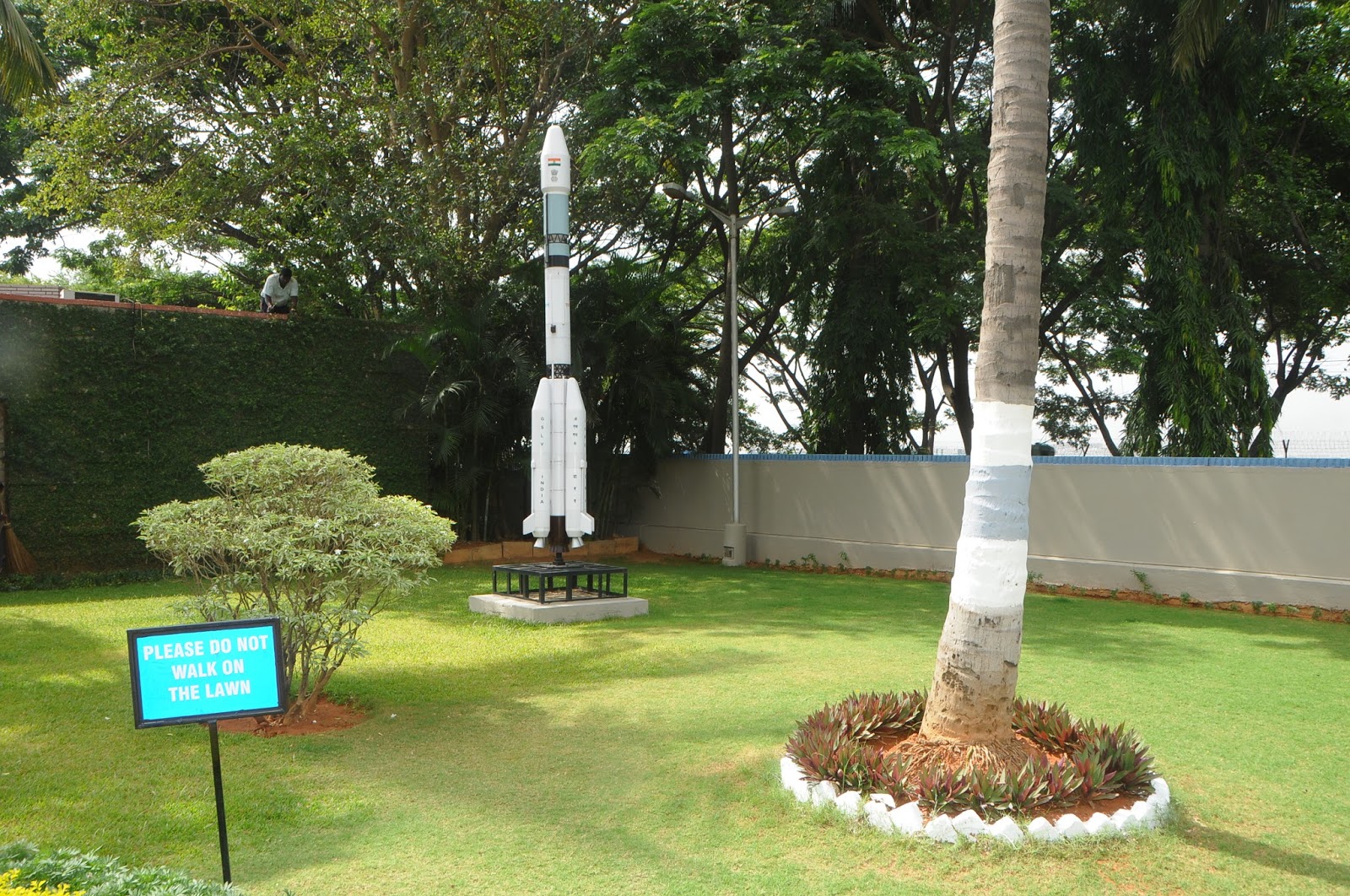
The centre, with 15 types of flying machines on static display, was established on August 30, 2001, in a 10-acre site. The museum houses rare photos from the 1940s and aircraft models that take the visitor on a journey through the heritage of aerospace and aviation industry in India. One can also see a dozen aircraft models and satellite launch vehicles (GSLV, PSLV) giving a glimpse of forays made by the country in space technology.
Visitors will come across facts like HAL produced buses and train coaches in early 50s, and that the black-box of an airplane is actually orange.
"We have done some fine modifications in view of HAL's platinum jubilee celebrations. These include refurbishing of metal art, murals, water cascade walls, renovation of cafeteria and fish pond", said T Suvarna Raju, CMD, HAL. The museum houses a library on aerospace and traces the development of the industry since 1940.
The additions include an orchidarium, a herbal garden, a children's play area and sustainability development park. The park has mock-up models of solar power systems, bio-gas plants and hybrid windmill.
Although HAL airport does not operate commercial aircraft anymore, a panoramic view of the landing and take-off of various aircraft and helicopters could still be experienced as chartered and test flights take off and land regularly. The entire stretch of runway could be seen from the dummy air-tower.
There is no weekly holiday for the museum, and it operates from 9 am to 5 pm with an entry fee of Rs 30 per person.
http://www.bangaloremirror.com/bangalore/others/HAL-museum-upgraded-gets-a-new-look/articleshow/50143725.cms
The centre, with 15 types of flying machines on static display, was established on August 30, 2001, in a 10-acre site. The museum houses rare photos from the 1940s and aircraft models that take the visitor on a journey through the heritage of aerospace and aviation industry in India. One can also see a dozen aircraft models and satellite launch vehicles (GSLV, PSLV) giving a glimpse of forays made by the country in space technology.
Visitors will come across facts like HAL produced buses and train coaches in early 50s, and that the black-box of an airplane is actually orange.
"We have done some fine modifications in view of HAL's platinum jubilee celebrations. These include refurbishing of metal art, murals, water cascade walls, renovation of cafeteria and fish pond", said T Suvarna Raju, CMD, HAL. The museum houses a library on aerospace and traces the development of the industry since 1940.
The additions include an orchidarium, a herbal garden, a children's play area and sustainability development park. The park has mock-up models of solar power systems, bio-gas plants and hybrid windmill.
Although HAL airport does not operate commercial aircraft anymore, a panoramic view of the landing and take-off of various aircraft and helicopters could still be experienced as chartered and test flights take off and land regularly. The entire stretch of runway could be seen from the dummy air-tower.
There is no weekly holiday for the museum, and it operates from 9 am to 5 pm with an entry fee of Rs 30 per person.
http://www.bangaloremirror.com/bangalore/others/HAL-museum-upgraded-gets-a-new-look/articleshow/50143725.cms
Monday, November 16, 2015
Cricket Stadiums in India Must Take Care of Spectators
The day two of the second test match
between India and South Africa which was called off due to rain on November 15,
2015, exposed how badly cricket stadiums are run in India and how the gullible spectators
are taken for granted. The so called covered stands were leaking all over at
Chinnaswamy Stadium, Bangalore and to make the matters worse the umbrellas were
not allowed. The ‘international standard ground’ was covered in patches leaving
out the out-field at rain god’s mercy. The out-field was muddy and
slippery. What happened to the modern methods of covering and soaking? Just
tireless manual work does not yield results although in this case play would
not have been possible as rain was continuous. There were no announcements on
the poor public address system and the only screen placed on one corner of the
ground had the line ‘the match delayed due to rain’. As if no one
knew about it. What people look is out-come of periodical
inspections made by umpires.
![]() |
| Patchy covers at Chinnaswamy Stadium, Bangalore on November 15, 2015 |
The occasional voice that came up
called upon the spectators to sing nursery rhyme “rain-rain go away”. The
stadium in general appeared poorly maintained. Quite a few seats were either
dirty or broken. I do not understand why drinking-water or umbrellas
were not allowed inside just because water bottle throwing incidents happened
on a rare occasion in the past. Umbrellas are needed whether it is sunny or
rainy day while the quality of drinking water provided within the stadium is
always a suspect.
Many spectators, women in particular
had to leave their umbrellas, purses, back-packs, cameras outside for which the
stadium security refused to take any responsibility. There was no token system
to mark the personal belongings – thrown reckless in some corner at the entry
points. The authorities must know that people come from far flung
areas, unaware of all kinds of restrictions. This stadium hosts many matches in
a year and I am sure must be making a lot of money through ticket sales,
advertisements, coaching sessions and so on. I hope, The Board of Control for
Cricket in India (BCCI), which is one of richest sporting organizations in
the world, takes notice of the poor treatment meted out to the cricket loving
spectators. If this is the case in Bangalore, situation must be worse elsewhere
at other centres in India.
Thursday, November 5, 2015
London Pubs: 'Hic' and happening
Can drinking be
considered a cultural activity? You will have a better picture of what drinking
means if you happen to be in London. Although my visit there was for a short
duration, it seemed to me that life in London revolves around its famed pubs
that offer frothy drinks and excellent food, fish-and-chips in particular.
Here, in this city of nearly eight million people speaking 300 different languages, I realised that weekend is considered a good time for the working class and their friends to ‘meet up’ at these joints and enjoy themselves. London pubs (most of them) are open on all days till 11.30 pm. “It is not just about weekends; people here enjoy all the time and in all seasons. You can’t be in London and refuse to be a part of its pub culture,” says my friend Babul Mukherjee, who has been a part of this culture for over 10 years now.
What is the most attractive aspect of a typical pub in London? It is classy and boasts of calm surroundings. There are no noisy streets around. And, one thing that is common to all of them is the premium they place on quiet surroundings. Looks and architecture are important to them and therefore every pub strives to look beautiful in its own way, with open spaces, wooden tables and classy furniture.
You find people — minimum age to purchase alcohol is 18 — enjoying their beer with banger and mash (sausages with potatoes or meat) or with some other dish. Notwithstanding rare fist fights, people here talk about and debate any subject under the sun.
Here, in this city of nearly eight million people speaking 300 different languages, I realised that weekend is considered a good time for the working class and their friends to ‘meet up’ at these joints and enjoy themselves. London pubs (most of them) are open on all days till 11.30 pm. “It is not just about weekends; people here enjoy all the time and in all seasons. You can’t be in London and refuse to be a part of its pub culture,” says my friend Babul Mukherjee, who has been a part of this culture for over 10 years now.
What is the most attractive aspect of a typical pub in London? It is classy and boasts of calm surroundings. There are no noisy streets around. And, one thing that is common to all of them is the premium they place on quiet surroundings. Looks and architecture are important to them and therefore every pub strives to look beautiful in its own way, with open spaces, wooden tables and classy furniture.
You find people — minimum age to purchase alcohol is 18 — enjoying their beer with banger and mash (sausages with potatoes or meat) or with some other dish. Notwithstanding rare fist fights, people here talk about and debate any subject under the sun.
In fact, most of the adults are said to be regulars who spend a considerable amount of time in the pubs. It is little wonder that families and friends can be seen immersed in conversations inside, while their children play outside.
It is clear that to understand more about English culture, you need to spend more time in a pub. You can even strike a conversation with a total stranger inside any pub and come out with an enriching experience.
There is more to a typical English pub besides being a place that offers thirst-quenching pint, chilled wine and food, especially in summers.
When it comes to service, overseas visitors must know that there is no ‘waiter service’ in these pubs. You buy your ‘stuff’ at the counter. “Perhaps the no-waiter system has been put in place by earlier generations to encourage sociability as the English are generally reserved people. This way, one gets an opportunity to strike conversation when people gather at the counter to place their orders. Pubs must be the only place where a queue is not followed in England and yet people are friendly in allowing others to have their order first,” says a journalist friend Isaac Hamza.
One needs to be calm, and a rushing attitude is not appreciated. “It is actually a home away from home. These pubs offer a cosy and pleasant atmosphere,” feels Mukherjee.
There is no compulsion to tip in these pubs, and most pints cost anything between three and four pounds, and come with instructions to ‘enjoy sensibly’. A pint contains four per cent alcohol. The UK Chief of Medicals recommends everyday limit of three to four units for men and two to three for women.
Although most of the pubs have menus, some pubs display their offers on chalkboards. One can always take the help from the counter to understand what the food varieties mean and contain, and how they taste. You need to be sure, even careful, before ordering dishes such as ‘Toad in the Hole’ or ‘Shepherd Pie’.
The article appears
on this Deccan Herald link as well:
Subscribe to:
Posts (Atom)